
-
Outdoor Laser Beam Outdoor Laser Beam Spot Wash Outdoor LED Spot Profile Outdoor LED Beam Spot Wash Outdoor Discharge Beam Outdoor Discharge Beam Spot Wash Outdoor LED Beam Outdoor LED Wash Outdoor LED ProjectorLIGHT Bar LED Madrix LED Retro Light LED Strobe Bar LED Strobe LED Blinder LED Fresnel LED Panel light
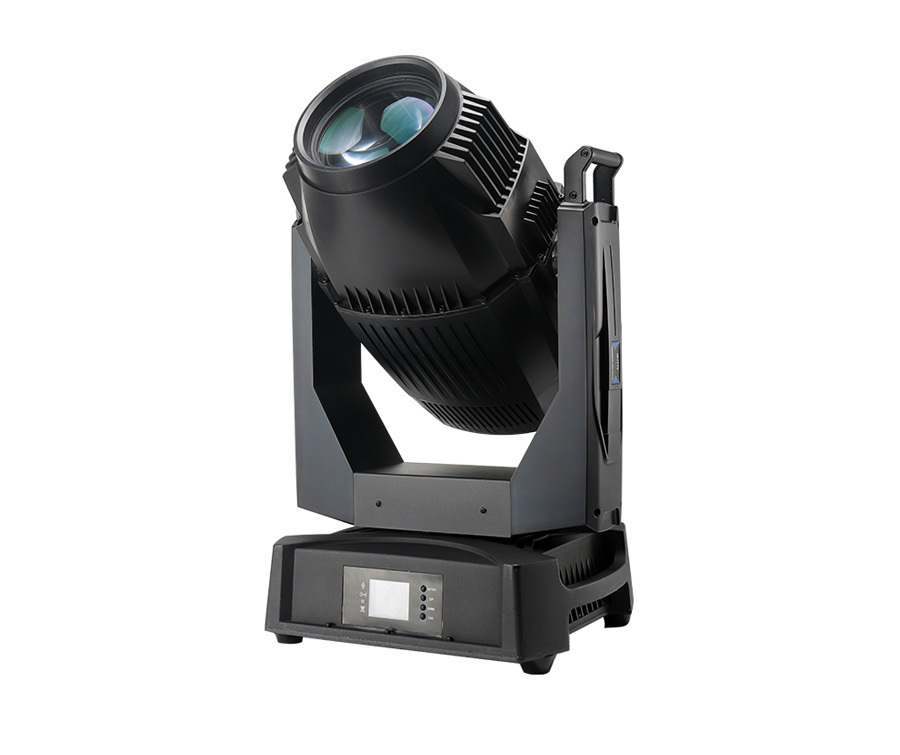

LED Spot Profile Moving Light: Precision, Flexibility, and Creative Control for Modern Stage Lighting
LED Spot Profile Moving Light is designed for lighting professionals who need more than basic illumination from a stage fixture.
Sep 30,2026
LED Spot Profile Moving Light is designed for lighting professionals who need more than basic illumination from a stage fixture. Modern concerts, theaters, corporate events, television studios, exhibitions, entertainment venues, and live performances increasingly require lighting systems that can deliver precise beams, clear visual effects, flexible positioning, and reliable operation. By combining the focused characteristics of a profile spotlight with the movement and programmable control of a moving light, this type of fixture provides lighting designers with a versatile tool for creating detailed and dynamic lighting scenes.
In traditional stage lighting setups, different fixtures are often required to complete different tasks. Spotlights may be used for focused illumination, profile fixtures for shaping the beam, and moving heads for dynamic positioning. Managing multiple types of equipment can increase system complexity, installation time, control requirements, and maintenance costs. An LED spot profile moving light combines several important functions into one fixture, helping production teams create a more integrated lighting system while maintaining the creative flexibility required for modern performances.
The LED light source is one of the fundamental advantages of this type of fixture. Compared with conventional lamp-based lighting, LED technology can provide efficient illumination with lower energy consumption and a long operating life. This is particularly valuable for venues and production companies that operate lighting equipment for extended periods. Whether the fixture is used during rehearsals, performances, exhibitions, or events, an LED-based system can help reduce the frequency of lamp replacement and simplify routine maintenance.
Another important feature is the focused spot effect. A well-designed optical system allows the fixture to project a concentrated beam toward a selected area of the stage or venue. This makes it suitable for highlighting performers, presenters, stage scenery, architectural details, exhibition displays, or specific performance areas. Instead of illuminating an entire space uniformly, lighting designers can direct attention toward important visual elements and create a stronger relationship between light and stage composition.
The profile function adds another level of creative control. Profile-style fixtures are valued because the beam can be shaped or controlled more precisely than with a simple open-beam light. Depending on the fixture configuration, features such as framing or beam-shaping mechanisms can help designers control where light appears and where it does not. This is especially useful when the lighting needs to create clean stage compositions, avoid unwanted spill, or highlight specific shapes and performers.
Movement transforms the fixture from a fixed lighting source into a dynamic production tool. A moving head can change its pan and tilt positions during a performance, allowing the beam to follow performers, sweep across the stage, or transition between different areas. When combined with programmable lighting consoles, multiple fixtures can be synchronized to create coordinated movement patterns. This flexibility is valuable for concerts, dance performances, theatrical productions, ceremonies, and other events where lighting needs to respond to changing scenes.

For concert productions, an LED spot profile moving light can play several roles within the same show. During an opening sequence, fixtures can create narrow beams that move in synchronization with the music. During a singer's performance, selected units can provide focused illumination while other fixtures create supporting visual layers in the background. During a high-energy section, programmed movement, color changes, and beam effects can increase the visual intensity of the stage. This makes the lighting system an active part of the performance rather than simply a source of brightness.
Theater productions present a different set of requirements. Lighting must often support storytelling, guide audience attention, and create distinct visual environments without interfering with the actors or scenery. A profile moving light can help lighting designers make controlled transitions between scenes. A fixture can focus on an actor during an important moment, shift toward a different performance area, or create a shaped pool of light on the stage. Because the fixture can be repositioned remotely, production teams can achieve different lighting arrangements without physically moving equipment.
Corporate events also benefit from this flexibility. Product launches, conferences, award ceremonies, brand presentations, and large-scale meetings often require lighting that looks professional while adapting to different parts of the program. The same fixture can illuminate a presenter, highlight a product, support a stage backdrop, or create movement during an opening performance. This reduces the need to install separate lighting equipment for every function and allows event teams to build a more flexible lighting package.
Exhibitions and entertainment venues provide additional application opportunities. At an exhibition booth, focused lighting can draw attention to a new product or important display area. In a themed entertainment venue, moving spot fixtures can contribute to atmosphere and guide visitors through different visual zones. In clubs and performance spaces, programmed movement and beam effects can create an energetic environment that changes according to music and event schedules.
One of the biggest challenges for professional lighting teams is balancing creative ambition with practical operating costs. Large productions may require dozens of fixtures, and equipment can remain active for many hours. Energy consumption, maintenance, transportation, setup time, and operator workload all contribute to the total cost of a lighting project. LED technology can help address some of these concerns through efficient operation and reduced lamp replacement requirements, while the multifunctional design of a profile moving light can reduce the number of separate fixture types needed for certain applications.
Consistency is also important in professional lighting. When multiple fixtures are used together, differences in brightness, color output, movement response, or optical performance can affect the overall appearance of a programmed show. Reliable manufacturing and careful optical and mechanical design are therefore essential. A stable moving mechanism allows accurate positioning, while consistent light output helps designers build coordinated scenes across multiple fixtures.
Control compatibility is another important consideration. Modern lighting systems often use professional control protocols to coordinate multiple fixtures from a lighting console. A suitable LED spot profile moving light should integrate smoothly into the control environment used by the production team. Once fixtures are addressed and programmed, operators can create scenes, cues, movement sequences, color changes, and other effects according to the requirements of each performance. This makes the fixture suitable for both simple event setups and more sophisticated programmed productions.
Consider a touring concert team that needs to move equipment between different venues. The production crew has limited setup time at each location and needs lighting fixtures that can perform multiple roles. Instead of transporting separate groups of fixed spotlights, profile fixtures, and moving heads for every lighting task, multifunctional fixtures can simplify the equipment package. During setup, the crew can position the fixtures on trusses or other suitable structures, connect the control system, and configure programmed scenes. This can help streamline preparation while maintaining creative possibilities throughout the show.
For rental companies, versatility can also be valuable. Rental equipment needs to serve different customers and event types, from concerts and weddings to corporate events and theatrical productions. A fixture capable of performing several lighting functions can potentially be used across a broader range of projects. This can make inventory planning more flexible and help rental companies respond to different customer requirements without maintaining excessive numbers of specialized fixture models.
Maintenance and serviceability should also be considered when selecting professional lighting equipment. Stage fixtures operate in environments where transportation, repeated installation, vibration, dust, and long operating hours can place demands on mechanical and electronic components. A practical design should support regular inspection and maintenance, while appropriate thermal management can help protect the LED source and internal electronics during extended operation. For professional users, reliable operation is not simply a convenience; it is closely connected to event quality and production scheduling.
The product also helps solve the challenge of limited stage space. Not every venue has the capacity to install large quantities of specialized equipment. By combining focused illumination, profile-style control, and motorized movement, a multifunctional fixture can provide multiple creative possibilities within a relatively compact equipment footprint. This can be especially useful for medium-sized venues, touring productions, event companies, and temporary installations where transportation and available rigging space are important considerations.
From a creative perspective, the real value of an LED spot profile moving light lies in its ability to give designers more control over the relationship between light, movement, space, and performance. Lighting can be static when the scene requires focus, dynamic when the music becomes energetic, precise when a performer needs to be highlighted, and expansive when the entire stage needs visual impact. With suitable programming, the same fixtures can contribute to different moods throughout a single production.
As stage and event production continues to evolve, lighting equipment is increasingly expected to combine performance, flexibility, efficiency, and intelligent control. An LED spot profile moving light answers this demand by bringing focused projection, profile-style beam control, motorized positioning, and LED illumination into one versatile fixture. For concerts, theaters, corporate events, exhibitions, entertainment venues, and rental applications, it can help production teams reduce equipment complexity while expanding creative possibilities.
Choosing the right lighting fixture ultimately depends on the venue, performance requirements, control system, installation conditions, and desired visual effects. However, for users looking for a flexible fixture capable of supporting both precision lighting and dynamic stage movement, the LED spot profile moving light offers a practical solution. By improving control over where light goes, how it moves, and how it contributes to the overall scene, it helps transform professional lighting from simple illumination into an important part of the visual experience.
PREVIOUS:

FILL IN YOUR REQUIREMENTS
If you are interested in our products, please leave your email and we will contact you as soon as possible. Thank you!
Cell/WhatsApp:
Email:
Address:
36 Building Meidong Industrial Park, San Dong Avenue, Huadu District,Guangzhou, China.

 facebook

 Mobile


 Tiktok